
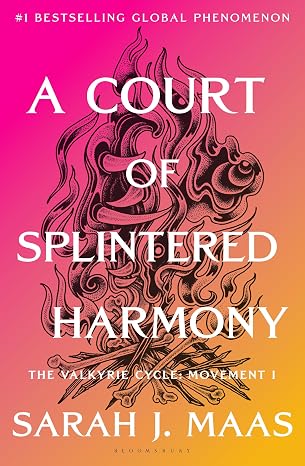
Spoiler Warning: I’m going to be discussing a specific structural aspect related to the latest ACOTAR book in this post. It isn’t a massive spoiler beyond briefly discussing a single event and some character motivations, but any reader who wants to go in without any prior knowledge whatsoever should probably skip this one.
I’ve been wanting to write about my experience reading the latest A Court of Thorns and Roses book (ACOTAR), but every time I tried to get my thoughts on paper, they became a novel longer than the book itself. I have a lot of frustrations with the direction this series is going and it’s hard to condense into one singular post. Therefore, I decided that the best way to handle this is to discuss some of my larger, overarching issues with this series being mishandled in their own posts.
How Not to Do a Multiverse
For this particular post, I want to discuss how I strongly believe that the choice to make ACOTAR part of a larger multiverse (the Maasverse) is a mistake. For context, I did not read the Crescent City books prior to A Court of Splintered Harmony. At this point in time, I barely tolerate the ACOTAR series (more on that another time), so I’m not rushing out to start reading multiple other series in order to see the overlapping events and lore. Now, I do spend far too much time on social media, so I was aware of the fact that Crescent City set up a multiverse. I wasn’t sure of how in-depth that multiverse was or the nature of what happened in these books, but I was aware that the hot topic from the moment ACOSH was announced was whether Crescent City was required reading before the new ACOTAR.
Therefore, the interesting question to answer here, as someone who did not read Crescent City, is did I find that my experience reading ACOSH was compromised due to not having prerequisite information? The answer to this is, unsurprisingly, complicated. Purely from a plot perspective, the singular event that’s really discussed in ACOSH related to Crescent City is summarized well enough to keep moving the plot along without issue. Nesta gave Bryce the mask, and the court is mad at her for it. There’s a few other small moments where someone may reference a specific character from Crescent City in isolation, but those moments are usually well-understood through simple context clues. From a plot perspective, there isn’t really a major concern.
That said, this singular event from Crescent City may be summarized with a single sentence, but this moment and what it means for Nesta and the court is load-bearing for the plot here. Therefore, it creates an interesting conundrum where, with the information I was given by the narrative, I genuinely cannot understand why anyone would be upset with Nesta, as her actions seem perfectly justifiable to those of us who have not read Crescent City. The issue is, I have no way of knowing if the information I was presented with within ACOSH is a fair reading of the events of the last Crescent City, and whether what is summarized in a sentence or two could possibly capture the nuance of several hundred pages of plot within the sister series.
I don’t know if this particular case is true or not. Maybe all readers are looking at the events of ACOSH and believing that the court is overreacting. Still, with the next book in the series just a few months away, this small thought experiment will continue to remain relevant: What happens when there’s a gap in understanding between those who did read the sister series and those who are simply provided the one-sentence summary of events? If I’m looking at the court and thinking they’re all treating Nesta horribly for no reason, but everyone who read Crescent City has absolutely no issue with this treatment and feels Nesta behaved inappropriately, we cannot see eye-to-eye because we were fundamentally presented with different information, thus, well, splintering the fanbase.
This is fundamentally the concern that I have with a multiverse, especially one treated with this strange cloak-and-dagger secrecy on the part of the publisher and author. Since this crossover doesn’t seem to have been initially planned by either the author or publisher, its very existence gets treated like a plot twist. However, to treat this reveal like a plot twist is to betray the fans, as now the publisher can’t be open about Crescent City being required reading because to do so is to inherently spoil the plot of this series. However, imagine being a longtime ACOTAR fan, going into this sixth book without this additional knowledge, and not only feeling left out of the loop because all the characters are in vastly different positions compared to book five, but a huge part of Crescent City has now been spoiled. It’s truly a mess that is going to result in leagues of unhappy fans, not to mention endless infighting between different groups of fans over what is or isn’t required reading to be a “true fan”.
Some may argue that the warning to read Crescent City before ACOSH was put out on social media by fans of the larger Maasverse, but I don’t buy that as an excuse. First of all, not everyone is online enough in the book spaces to see the warnings, and secondly, fans should not be doing work that should fall on the shoulders of the publisher and the author. On top of that, this was a huge release. Many people got this book at a midnight party and stayed up all night reading it. Every conversation prior to this release was speculating if Crescent City was needed or not. Given ACOSH is pretty short, by the time it was determined by fans that the sister series should be read first and the alarms were raised, the damage was likely already done for many readers. Not nearly enough care was done in the creation of this multiverse and the product suffers because of it.
Comparing to other Multiverses
Moreover, I’d like to address a common defense I see of the multiverse: That it’s done all the time in other fiction. I appreciate the sentiment here, but it comes back to how it’s executed. For example, Brandon Sanderson’s books are almost entirely set in a common universe, but each individual series can be read in any order (Other than Mistborn, where each era is clearly numerically ordered) and there’s very little beyond easter eggs and a common character or two to worry about. Things like Robin Hobb’s Realm of the Elderlings series, on the other hand, is a “series of series” where it’s well-known that there’s a specific reading order. A diagram can be found easily on her website showing that the series is interconnected.
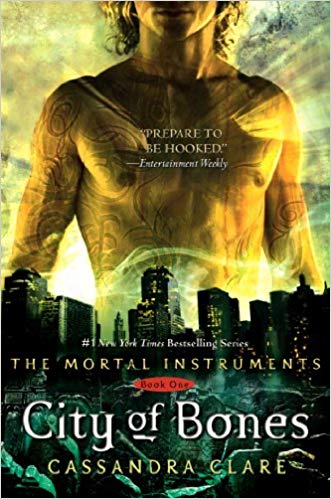
The most similar reference point I can think of to what Maas is trying to accomplish here is perhaps Cassandra Clare’s Shadowhunters universe, since that is also a series of series with light overlap between them. In this case, though, Cassandra Clare has an in-depth FAQ on her website explaining how each series ties into each other, which to potentially read in order, and whether the series can be read standalone if desired. She understands that the reading experience could be overwhelming to new fans and has taken steps to reassure them. For example, one part of Shadowhunters that gets confusing is that two series were being published simultaneously and the ideal reading order is to alternate between the series to match publication order. This is brought up specifically in the FAQ so readers are aware, though it is also specified that both series are standalone and do not need this reading order to be enjoyed.
By comparison, Sarah J Maas does not do nearly as good of a job in this regard. Her website shows a reading guide by publication of the first book in each series. If a reader chooses to pick books up in the order she puts them on her website, then readers would actually pick up Crescent City after ACOSH spoiled them for it. She further links to a page by her publisher that states some things that may be useful, but still doesn’t really get at the crux of the issue here. In fact, if following the reading guide to the letter, it states that reading ACOTAR before Crescent City may make for a more enjoyable experience. I’m sure the writer of the guide meant that readers should read through the fifth book, Silver Flames, and it wasn’t updated for ACOSH, but again, this isn’t specified and may lead readers to pick up the books in the wrong order.
To summarize here: The most confusing that Shadowhunters gets is that after the first three books of the first series, readers must start alternating between the original series and a new spinoff series. The concept of having multiple interconnected series was introduced early on, and given ample warning to new readers today. For the greater Maasverse, readers must read five ACOTAR books, read three Crescent City books, then read ACOSH. That’s not even including the increasing likelihood that Throne of Glass may be interrelated to all of this madness with the shadow of ACOTAR‘s next book looming over us all. This multiverse is introduced late in the game, which means its very existence is treated as a spoiler and the correct reading order is kept a secret unless readers find out via word-of-mouth by fans, and if the books are read in the wrong order, can cause confusion or thoroughly spoil other series. This is a bad way to write a multiverse and I stand by this.
Overall, I’m not sure what the right answer here would have been other than for Maas and her publisher to just accept the minor spoilers for Crescent City and be open about these books being set in a multiverse. Give readers a clear reading order, make it obvious in the author’s note or on the website which books should be read first for the most enjoyable experience, and stop expecting readers to piece it together for themselves. I’d like to believe that this will get sorted out before the next ACOTAR in a few months, but I’m doubtful. If anything, as I stated before, I’m worried that the Throne of Glass series is going to become relevant to the Maasverse and further confuse everyone.
I’m still going to read the seventh book in this series because, well, I already pre-ordered it before book six became a mess. Will I read more of the Maasverse before it comes out? Maybe. I would like to know more about what’s being set up here and get more context for what happened in book six of ACOTAR, but I also know that I may be setting myself up for disappointment because I have a wildly messy relationship with Maas’ books. If I read more, though, I will continue to write about them, as well as continue to share my thoughts on book six in some subsequent posts.


This sounds horrible, and like one of the worst ways to have done this.
LikeLike